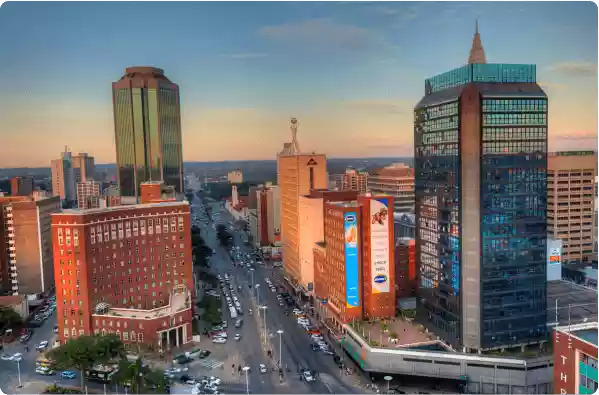
- Country: Zimbabwe
- Summary: Consultants to Take up a Consultancy on Technical Assistance for Development of Inclusive Education Policy
- ZWT Ref No: 27908899
- Deadline: 05 Nov 2018
- Financier: United Nations Secretariat
- Purchaser Ownership: Government
- Tender Value: Refer Document
- Notice Type: Tender
- Document Ref. No.:
- Purchaser's Detail:Login to see full purchaser details. Login to see full purchaser details. Login to see full purchaser details. Login to see full purchaser details. Login to see full purchaser details. Login to see full purchaser details. Login to see full purchaser details. Login to see full purchaser details. Login to see full purchaser details.
- Description:
- Tenders are invited for Consultants to Take up a Consultancy on Technical Assistance for Development of Inclusive Education Policy. UNICEF works in some of the world’s toughest places, to reach the world’s most disadvantaged children. To save their lives. To defend their rights. To help them fulfill their potential. Across 190 countries and territories, we work for every child, everywhere, every day, to build a better world for everyone. And we never give up. 1. Background Overall school attendance in Zimbabwe is high compared to other countries in Sub-Saharan Africa characterized by 2016 gross enrolment rates for pre-primary, primary and secondary school levels which stand at 52.0 per cent, 105.1 per cent 56.3 per cent respectively (EMIS 2016). However, disaggregated data of school attendance by urban/rural, districts and wealth quantile shows inequity in access to education in Zimbabwe. For instance, net attendance ratios in rural and urban primary school are 92.6 per cent and 96.2 per cent respectively. The disparities by wealth quantile are significant characterized by 90.4 per cent for poorest and 97.5 per cent for richest at primary level and 35.3 per cent for poorest and 81.3 per cent for richest at secondary level (MICS 2014). Disparity is not limited to access but also in quality of education. The distribution of qualified teachers and pupil teacher ratios depend on the geographical locations and income of the schools, and learners’ performance is affected by these factors (Kageler 2015, ZELA report 2016). Children with disabilities are one of the biggest groups who are excluded from education at all levels. They are excluded due to limited social acceptance, physical barriers and insufficient support at schools (Deluca et al. 2014; MoHCC 2013). The persistent inequity in education among various groups of children indicates that recommendations of the 1999 Presidential Commission of Inquiry into Education and Training (CIET), which contains an implementation matrix for the education sector to include marginalized children such as children with disabilities, children living on the streets, children with HIV and AIDs, Orphans and vulnerable children, and hospitalized children and girls, have not been fully addressed. In order to tackle these issues, Ministry of Primary and Secondary Education (MoPSE) with support from development partners and UNICEF has implemented various programmes such as disbursement of school improvement grant to disadvantaged schools, in-service teacher training (Early Reading Initiatives, Performance Lag Address Programme), provision of non-formal education, promotion of school WASH and health, implementation of new curriculum and support for children with disabilities. These programmes are expected to increase the equitable access to inclusive quality education for all children. Inclusive education in Zimbabwe -Situation Summary- Zimbabwe has demonstrated its commitment to promote the right to education for all by ratifying international and regional agreement and developing relevant pieces of national legislation and policies. As for international agreement related to inclusive education, Zimbabwe is party to the Convention against Discrimination in Education; the Convention on the Elimination of all Forms of Racial Discrimination; the Convention on the Elimination of all forms of Discrimination Against Women; Convention on the Rights of the Child; Convention concerning the Prohibition and Immediate Action for the Elimination of the Worst Forms of Child Labour; Convention on the Protection and Promotion of the Diversity of Cultural Expressions and Convention on the rights of the persons with disabilities. At the national level, Zimbabwe’s national Constitution guarantees the right to the basic education for all, which is also stipulated in the Education Act. Various policy documents also emphasize issues of inclusion such as the national gender policy that provides for equal right to education for boys and girls, and the national policy on HIV/AIDS that states that there shall be no discrimination to access to education due to HIV status. Similarly, the Zimbabwe National Orphan Care Policy is providing a supportive flow for OVCs. In the area of disabilities, Zimbabwe was the first country in Africa which developed a disability-specific legislation. Zimbabwe put in force the Disabled Persons Act in 1992, a legislation which provides for equal opportunities to education, employment and other activities and services for people with disabilities. The national constitution also recognizes the right of persons with disabilities to education on the equal basis with others. The National Disability Policy which has a section on inclusive education is also currently being finalized. Despite of the government’s commitment to inclusive education through policies, an alarming number of children (1,234,641), 26.3% of school-going age children, are excluded from or within school according to the study of national assessment on out of school children in Zimbabwe (UNICEF 2015). There are several studies which identified the reasons for children not attending schools such as Zimbabwe Vulnerability Assessment Committee Rural Livelihoods Assessment (ZIMVAC 2017), the Child Labour Survey (ZIMSTAT 2014) and the National Assessment on Out of School Children in Zimbabwe (UNICEF 2015). Though the findings differ depending on the study, all the studies reported that the biggest reason for children out-of-school was financial constraints. As a countermeasure to this, Government of Zimbabwe has in place the Basic Education Assistance Module (BEAM), a social protection programme that aims to provide school fees (tuition, levies and exam fees) for approximately 30 % of the poorest children of school-going age. However, the payment has stagnated, putting learners affected at the risk of exclusion. The rural Livelihoods Assessment of 2017 also found that 2% of children who were not attending school identified disabilities as a reason of non-attendance. At present, children with disabilities do not have access to quality primary and secondary education on an equal basis with other children without disabilities. It is estimated that more than three quarters of children with disabilities of school-going age were out of school in 2012. The most prominent reason for not attending school (had never attended/had left school at some point) for persons with disabilities, according to the Living Conditions among Persons with Disability Survey (LCPDS) in 2013, was financial (57.4%) followed by disability (12.2%), illness (8.6%), and underachievement (7.3%) (MoHCC 2013). In addition, the lack of assistive devices and lack of trainings for teachers on specific pedagogical skills especially for mainstream school are reported as major barriers at school level which prevent equitable access to inclusive education in Zimbabwe. Caregivers of children with disabilities also reported distance to school, direct/indirect cost and fear of abuse as barriers to access to education (Deluca et al. 2014). People with disabilities in Zimbabwe are discriminated and abused in their daily life. 7% of the people with disabilities in the LCPDS responded that they had experience of being refused admission into school on the grounds of disability. The survey also revealed that 3.4% of people with disabilities believed the major cause of their disabilities were due to witchcraft (MoHCC 2013). Zimbabwean culture still regards disability as a curse and has limited social acceptance of people with disabilities (Choruma 2007). The situation analysis above shows ratification of legal instruments related to inclusive education and enactment of right-based constitution and national laws do not automatically change the situation of people who are excluded from the education system unless the Zimbabwean government comes up with an inclusive education policy which gives clear strategic directions of the practice of inclusive education. With this background, the 2016-2020 Education Sector Strategic Plan (ESSP) has highlighted the development of the Inclusive Education Policy as one of its priorities. The new national curriculum also highlights inclusivity as one of its principles. For this reason, there has been a proposal to develop a clear and robust strategic policy on inclusive education to guide and operationalise the delivery of inclusive education initiatives and provisions at all levels of the primary and secondary education system. Such a policy must reflect clear plans of activities, funding priorities, roles and responsibilities of key stakeholders in the implementation of programmes, monitoring and evaluation plans as well as their relative contribution to this effort. The development of an inclusive education policy is a complex undertaking that requires guidance from a broadly exposed and experienced educationist with experience at policy analysis, planning and implementation, as well as practical Results Based Management application skills. The skills required range from the ability to analyse both qualitative and quantitative data and transform it into a robust policy document. The inclusive education policy itself must reflect the interplay and linkages among a complex set of political, legal, economic, demographic, socio-cultural, and cultural factors. 2. Objectives The key objective of this consultancy is to develop a policy on inclusive education with focus on promoting the equitable access to and participation of all children in the Infant, Junior, Secondary and Non-Formal educational provisions of Zimbabwe. The inclusive education policy should come with a time-framed and a costed implementation framework with clear targets, roles and responsibilities of various stakeholders for measurable progress reporting, M&E of programme initiatives, provisions and regulatory compliance with inclus
- Documents:
If you are registered member, kindly login to view full details of this tender notice:
CLICK HERE TO LOGINConsultants to Take up a Consultancy on Technical Assistance for Development of Inclusive Education Policy - Zimbabwe Tender
The UNITED NATIONS CHILDREN'S FUND, a Government sector organization in Zimbabwe, has announced a new tender for Consultants to Take up a Consultancy on Technical Assistance for Development of Inclusive Education Policy. This tender is published on ZimbabweTenders under ZWT Ref No: 27908899 and is categorized as a Tender. Interested and eligible suppliers are invited to participate by reviewing the tender documents and submitting their bids before the deadline on 2018-11-05.
The estimated tender value is Refer Document, and full details, including technical specifications and submission requirements, are provided in the official tender documents. Ensure all submissions meet the criteria outlined to be considered for evaluation.